Showing posts with label writing. Show all posts

Tuesday, October 22, 2019

Ending the Debate Over Ending Punctuation


A few weeks ago, my writing group called into question the use of  !? to end some dialogue in my work in progress. I staunchly defended my choice but failed to change their minds. Then—with uncanny timing—Facebook friend Gail Johnson posted about Benjamin Dryer’s recently released book Dreyer’s English: An Utterly Correct Guide to Clarity and Style. The title intrigued me—grammar nerd that I am—but the reviews are what convinced me to make the purchase. It’s not often a writing instruction book garners descriptions such as “utterly delightful,” “smart and funny,” and “brilliant, pithy.”
Also described as a "mind-blower" and
a "frankly perfect book."
A few pages in, I realized the book is deserving of its accolades. It truly is a book that “makes you smile and makes you smarter at the same time.” But what amazed me is that on page 65, rule #64 provides the answer to whether !? should ever be used. According to Dreyer ... it shouldn’t. He considers the use of it so completely wrong as not to be worth discussing. What!?

Far be it from me to challenge the wisdom of the copy chief of Random House (which Dreyer happens to be), but I contend there are times when a single mark of punctuation simply won’t suffice.  Take, for instance, these lines from my WIP. 

“That’s it, JJ,” Barb said, pointing. “My truck.”
“That?!”

My intention was to convey JJ’s simultaneous need for confirmation and amazement that Barb would be driving a one-ton sweeper truck. Does “That?” Or “That!” adequately express this mixture? 

I rest my case.

I suppose JJ’s emotional state could be described with words.

“That?” JJ hiked his eyebrows high on his forehead, and his eyeballs bulged from their sockets. 

But why go to all that trouble when the same effect can be achieved by two simple taps? Well, three. You also have to tap the shift key.

I agree with most of what Dreyer has to say in his book. (I’m sure he’ll be relieved to know this.) I agree the use of  double exclamation marks or double question marks is superfluous. Do we need to stress that a question is being asked or a character is expressing intensity of emotion? No! And Dreyer’s mandate that “periods and commas … are always (italics mine) set inside [terminal quotation marks]” makes me smile. Broadly and smugly. 

Dreyer does offer me hope in my struggle to gain approval for !? with the following revelation: “The dictionary takes its cue from use.”  If writers (as in everyone who writes) want “rest room” to become “restroom,” all they have to do is persist in using the latter. If we want to start sentences with “And” or “But,” now we can because we’ve insisted on doing it for so long. It makes sense that punctuation should follow this same process of acceptance—within reason. “Ladie’s Restroom” should never be legitimized no matter how many times it appears on the doors of ladies’ restrooms.

If you feel as strongly as I do that sometimes ?! is not only warranted but necessary, please join with me in continuing to use it. But because this path to acceptance could be a long one, I’m also asking you to do one more thing to expedite the matter. In the comments on this blog, on Facebook, or on Twitter, simply respond with ?! Feel free to respond as many times as you like, as that will increase its frequency of use.

PS While we're advocating for this mark of punctuation, we also need to come up with a name for it. Any suggestions?


Wednesday, November 14, 2018

Survivalist Writing


Writing for pleasure, profit, persuasion? Sure!

But writing for survival? Hmm...


Check out my guest post on on the Southern Writers blog, Suite T.

Tuesday, May 17, 2016

My Poem Didn't Win

The title of this post isn’t completely true. I actually did have a poem that won second place at a recent writing conference. It just wasn’t the poem I thought would win—the one I really hoped would win. But this post is far from a complaint. It’s a celebration of what did win. And it’s chance to share the poem that “lost.”
I’m familiar with the person who judged the category for my poem. I know him to be an excellent poet and, more importantly, a kind person. I’m sure he had a difficult choice in selecting winners from over forty poems submitted by talented writers. And I’m sure the winning entries were deserving of those honors. I’m also sure that while my poem isn’t a winner, it isn’t a “loser,” either. In fact, it might be my favorite of all the pieces I’ve ever written.
Author StevenJames spoke one night at the conference about The Untouched Moment and how writers have the opportunity to capture moments that “resonate with truth.” Here’s the truth behind this poem: A picture of my grandson Brooks, taken by my daughter last spring, inspired it. I set it as the background on my computer desktop, and every time I looked at it, I smiled and thought there's a poem in there somewhere. Eventually, the poem surfaced. The picture takes me not just to the happy place Brooks was experiencing but to those magical times all children encounter through their imaginations. Those moments untouched by logic and reason and fear.

Last Christmas, I had the photo and the poem transferred onto a 5X7canvas and gave it to my daughter. She has it displayed in her living room. At the ripe old age of five, Brooks probably can’t appreciate this gift right now. But at some point in the future—maybe even after his Grammy Dee is gone—I hope he’ll look at the picture and read the poem and be transported back to a care-free, childhood moment. And I hope he’ll appreciate that his mother and his grandmother were able to capture it for him.
 
                                                              Swingset Superman

                                                        Red cape streaming
                                                        o’er field of green,
                                                        Superman flies
                                                         in a backyard swing. 

                                                        Toes in gray Crocs
                                                         reach for the sky.
                                                         Shouts defy death,
                                                         “Push high! Push me high!”
 
                                                         No time to waste!
                                                         Evil must be subdued.
                                                         Wrongs must be righted,
                                                          justice pursued. 

                                                         Gripping chains tight,
                                                          he chaos assails.
                                                          There are buildings collapsing,
                                                          trains off their rails! 

                                                          What danger awaits--
                                                          what marvelous wonder--
                                                           this brave hero’s trek
                                                           through the endless, blue yonder?


Tuesday, July 7, 2015

Blogging: Busking for Writers


            At fifty-five, Carl Falsgraf chucked his successful, well-paying career and set out on a forty-nine-day, round-trip journey from Eugene, Oregon, to Portland, Maine. He planned to use this time to unwind, re-charge, and reflect on what to do with the remainder of his life. Along the way he recorded his reflections and revelations, which he later shared in his travel memoir Highway Blues. A musician and songwriter, he also composed some new songs as he traveled. And—in an activity that especially interested me—he tried his hand at busking.
            As I type this post, I’m glad to see that busk is immediately underlined with a red squiggle. Spellchecker is as unfamiliar with the term as I was. But dictionary.com ensures me it is indeed a word and means “to entertain by dancing, singing, or reciting on the street or in a public place.” The web site further informs me it is a chiefly British term, and a YouTube search reveals that, British or not, it is a thriving activity the U.S.
            Falsgraf describes busking as “the most primal, challenging, and rewarding mode of musical experience.” The busker puts himself out there without the benefit of advance people, publicists, promoters, and all manner of fancy sound equipment. It’s just him, his raw performance, and his voluntary audience. Feedback is immediate: If people don’t like the performance, they walk away.
            While busking can be nerve-racking, rewards do exist. Most often they are in the form of busy passers-by who pause to listen and indicate their pleasure by smiling and maybe nodding along to the music. If they are especially appreciative, these transitory fans might toss some coins into a jar or instrument case, but don’t count on those tips to pay the bills.
            As I read Falsgraf’s explanation of the experience, it struck me that busking and blogging have much in common. In fact, I’ll venture to say that blogging is to the writer what busking is to the musician. Especially the way I do it. While there are the professional bloggers who garner huge followings and rake in mega-bucks, a glance at my blog will quickly reveal its amateur status: not a lot of money invested, not a lot of hours spent in SEO searches, not a lot of advertising and/or promotional schemes. I do have the opportunity to edit and revise before casting out my writing “pearls,” but my posts are raw in that no professional editor or even trusted writer friend has tweaked them. As for feedback, the stats quickly inform me how well received my efforts are.
            Certainly, there are no financial rewards—not even a few coins tossed my way. But, as with busking, rewards can take other forms. There is the opportunity to air my thoughts and observations (of which I have many) without the pressure of meeting a quota or deadline. I have the freedom to choose my topics “as the spirit moves me.” I get the pleasure of feedback in the forms of comments and “likes” and “shares” and in the discovery I’ve added another follower. And there is always the unexpected bonus of someone complimenting you on a post and you had no idea they even read your blog.
            It took me years to arrive at this conclusion, but I consider writing to be like any other talent. And just as there are all types of forums in which other talents can be shared, blogging provides one in which both the writing pros and the “buskers” can publicly perform.


Wednesday, May 20, 2015

Critique Recovery 101

Writing contests: the thrill
of victory...
...and the agony of
critique
         As a battle-scarred veteran of many writing contests, I’ve had my share of wins and, in my opinion, more than my share of losses. I’ve also received my share of critiques. Here are some strategies I’ve developed over the years for dealing with critiques that can make me feel like either a budding John Grisham or a withering writing wannabe.


1. Be appreciative.
 I’ve never judged a writing contest, but I’ve graded approximately two million student essays in my day. I’m thinking the experiences must have a lot in common. Both can be thankless jobs, and, generally, the compensation is minimal. Not all contests offer critiques or comments, so be thankful for the ones that do. Appreciate the people who took the time to read and often comment on your submissions (even the ones who weren’t astute enough to recognize a Nobel Prize winner in the making). And for the record, I've found most judges to be considerate, encouraging folks.
2. Repeat over and over to yourself: The critique is my friend.
While cleaning my desk the other day, I ran across this quote among some notes I’d taken at a conference: “Nobody ever got better by being told how great they are.”
I apologize to the creator of this quote, whose name I failed to record. There is so much wisdom in these words. If you’re fortunate enough to receive feedback, take advantage of it. Read it, digest it, nurse your bruised feelings, and then experiment with the suggestions. If they don’t work, toss ‘em. Not all suggestions are nuggets of wisdom. But some of them are, and if the feedback does work, you’ve taken a big step forward on your writing journey. From personal experience, I can tell you that many critique suggestions I’ve taken to heart have resulted in an award in a subsequent contest.
3. Can you say subjective?
Bear in mind that responses to writing—like responses to all art—are personal and subjective. I recently wrote what was—in my mind—a touching and inspirational short story. In the very first contest I entered it, I won first place (and $100. Yay!). I received the following comments: “Very powerful. Well written. Good details.” But the judge didn’t like my title because it seemed “... at odds with the generosity of spirit that marks the end of the story.” I agreed. I changed the title and entered it in a different contest ... with a different judge. No prize this time. And in the comments, the judge—who obviously came from a totally different mindset than the first one—gave my ending a 2 out of 10, explaining that it showed my main character to be “vindictive and completely delusional.” Huh? What about that “generosity of spirit”? Was this the same story? I promise I’m not bitter, just a little confused. But it proves my point that what can be a love story to one person can be a horror tale to another.  And I know I’m not the only writer to have experienced this.
In my English-teaching days, we addressed the matter of subjectivity by instructing student writers to “consider your audience.” In some contests, you might be fortunate enough to do that. If a contest you’re entering lists the judge(s), do research. Find out what you can about the judge’s background, what he himself writes or prefers to read. If you discover his own writing style leans more toward artsy and experimental and yours comes right out of the Elements of Style playbook, you might save yourself an entry fee and move on to the next contest—there are lots of them out there. Unfortunately, many contests don’t identify the judge(s) in advance. But many contest sponsors publish former winning entries. Give those a read and see if your entry is a good fit. Over time, you’ll start to recognize those contests which in general exhibit a preference for your particular style and/or subject matter, and you can use subjectivity to avoid post-critique stress.
4. Don’t quit.
On one of the most negative (as in downright nasty) critiques I ever received, I got the best advice I ever received: Don’t quit. And that’s what it boils down to. If you love writing, why let someone else rob you of that pleasure? With today’s technology, social media connections, and self-publishing opportunities, there is nothing to stop anyone who wants to from writing. You might not win a contest, get an agent or a Big 5 contract, or make the best-seller list. But you can write. And with that in mind, I’m closing with another quote I love by Florence Foster Jenkins in which I’ve substituted the word write for sing.  In response to her critics, Ms. Jenkins said, “Some may say I cannot [write]; but no one can say I didn’t.
 
        How about you? Have some strategies/insights that keep you writing?


Wednesday, September 24, 2014

Bird-brained Advice for Writing: Part II - Paying Attention

            When my cousin Jerry found out I’d written a book, he said, “I was going write a book one time. But I got to page ten and couldn’t think of anything else to say.”
            I’ve been there. But now I can solve this dilemma in two words: Pay attention.
            Many of my author friends have lamented that they’d rather write a three hundred-page novel than a one-page synopsis. Ditto for me. That’s because without the story’s juicy details, a synopsis can be as dry as the white meat on an overcooked turkey. So where do we get all those wonderful details? By paying attention.
            As far as I’m concerned, one of the perks of being a writer—and you can claim that title regardless of where you are in the journey—is sharpening the skill of observation. Writing increases the ability to look for and recognize the details that make people or events or surroundings unique and interesting. As Anne Lamott puts it in bird by bird..., “If you start to look around, you will start to see.” Maybe you’ll start to see that it’s that slightly crooked front tooth that makes a smile so engaging. Or maybe you'll notice that the nandina bush you'd given up for dead is sprouting a few green leaves at its base. 
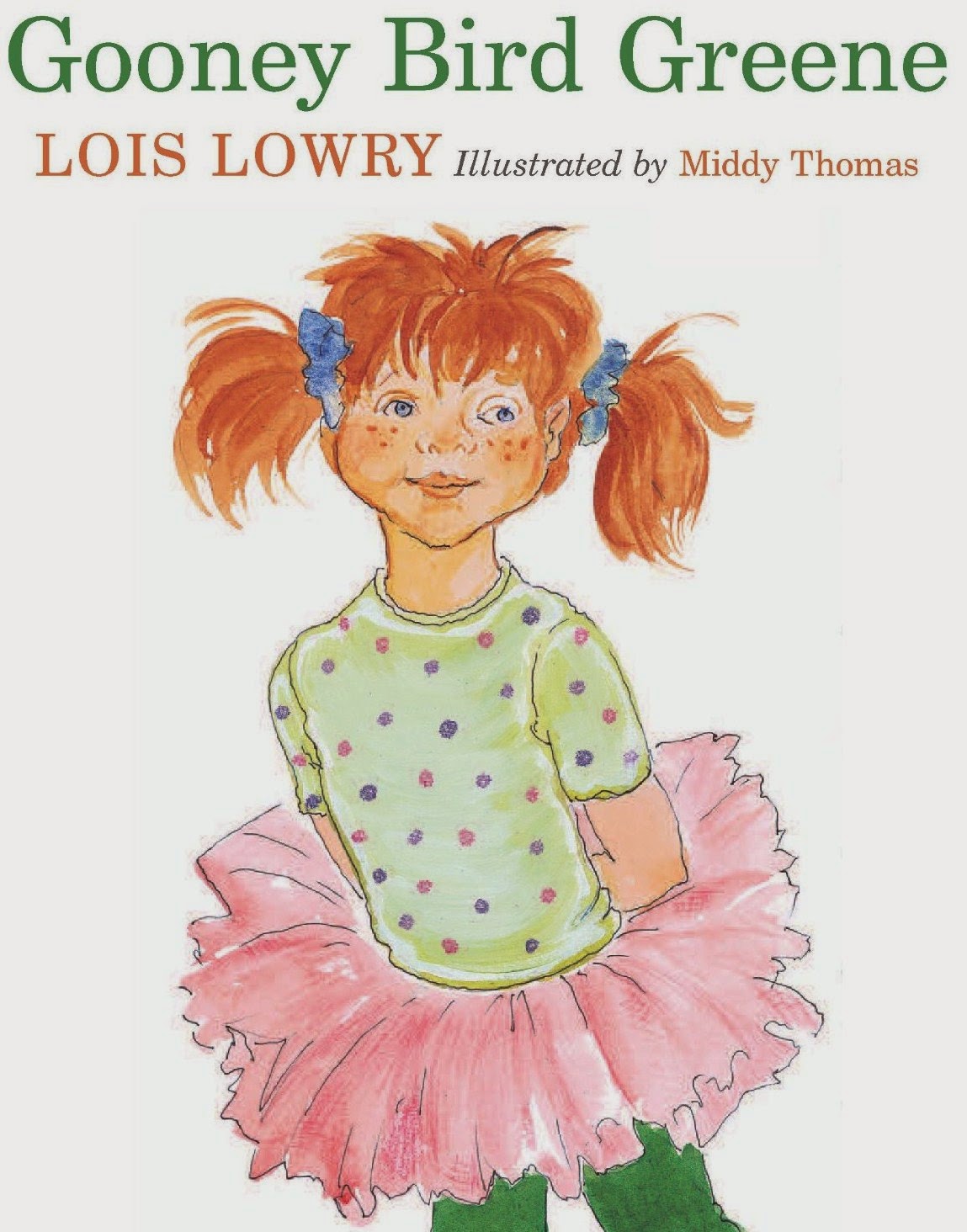
            Paying attention isn’t limited to what we see. Quite frequently I catch myself in a restaurant or in a line with my ear slightly leaning toward a nearby conversation. This isn’t eavesdropping. It’s research. Listening closely to conversations, wherever they occur, can alert you to the distinctions of voices, accents, speech patterns, and even mannerisms people use while talking (not to mention some interesting subject matter). Lois Lowry incorporates details such as these so skillfully in her Gooney Bird Greene series that soon the reader knows which character is speaking even before he is identified in the speaker tag. Listening extends beyond conversations. Pay attention to the sounds of nature, of music, of machinery, of windchimes.... Pay attention to the lovely and the harsh, the symphonies as well as the cacophonies.  
            Details can be gleaned from paying attention with all the senses. And they can be gleaned when paying attention when we’re reading. Some folks might consider me a snob for saying this, but I honestly do enjoy some books as much as for the way they’re written as for the plot or theme. I agree that description shouldn’t take a reader out of the story. But when skillfully done, descriptive details can plunge us more deeply into it, even when we pause and re-read a passage because it resonates with us. Of course, I’m not saying copy what another author has written and claim it as your own. But learn her technique. When you’re enjoying a particular line or passage, stop and ask yourself what makes it so enjoyable. What makes it stand out--the writer’s precise word choice, his candor, his ability to mix the ridiculous with the sublime and elicit a laugh?     
            A final, very practical word of advice about paying attention: As soon as you gather a great detail, write it down. I’m currently trying to train myself to carry pen and pad with me at all times because I’ve lost more good material to bad memory than I have to computer failure. Lamott says she never goes anywhere—even to walk her dog—without a pen and an index card. These days, those more technically savvy probably rely on phones or tablets, but I’m not to that point. Whatever works for you, use it. Just remember: Write. It. Down.
            Remember what I said about a line or passage that strongly resonates with us? This one from bird by bird...did it for me: “There is ecstasy in paying attention.” Amen.   

Friday, September 19, 2014

Bird-brained Advice for Writing: Part I - Generating Content


It’s almost spookier than the Hitchcock movie the way birds have lately invaded my writing space. In my last post, I reported on Anne Lamott’s book bird by bird: Some Instructions on Writing and Life. Shortly after purchasing that book, I listened to some audio books from Lois Lowry’s children’s series, Gooney Bird Greene. And it turns out Gooney Bird also has insightful information to offer on the art of storytelling. So like I said. Spooky.
            To be honest, I was less than enthusiastic when my sister Elaine announced we would be listening to the Gooney Bird CDs on a car trip. "I listened to these when we were on a trip with Brianna [her seven-year-old granddaughter and my great niece],” she said. “They’re really funny.”

            Yeah, I thought. Really funny to a seven-year-old. But what could I say? It was her car.

           So, as our journey commenced, I got comfy and—being in the seat behind her—prepared to sleep for the next few hours. But my eyelids had barely begun to droop when Lowry hooked me with her description of the eccentric and precocious Gooney Bird. By the end of the trip, we had to drive a few extra miles so I could find out the identity of the mysterious second-grade room mother. And in between our departure and arrival, Gooney Bird gave excellent tips on storytelling. I was surprised to find that much of Gooney Bird’s advice matched Lamott’s. After all, a wide age gap exists between the target audiences for each of these books. But when I thought about it, the similarities make perfect sense. After all, a good story is a good story, right? So the basic elements should be the same.
            For generating content, both Gooney Bird and Lamott essentially offer the age-old advice to write what you know. This doesn’t mean a writer has to be a technical expert on the subject she writes about. I guess it helps, but in this information age, a lot of technical knowledge is just an internet search away. I think what it does mean, though, is to take your own experiences and use them as a starting place. One of Gooney Bird’s stories explains how she got her name. She goes on to point out that everyone has a name; therefore, everyone has a story. Lamott’s advice is the same, only she drives home the point with a story about an aunt making lemonade. Surprisingly (or not), a subject common to both “bird” books concerns school lunches. Lamott describes how she uses them as an exercise for her writing classes. An entire passage in one of the Gooney Bird books “shows” Gooney Bird’s classmates describing and bartering with their varied and interesting mid-day meals.
            If there is an inkling of writer/storyteller in you (and I believe there is in everyone), the topic of school lunches has to evoke at least one good story. I immediately remembered the time I forgot to bring my lunchbox home from school. My mother was out of brown bags, and the next day I had to suffer the extreme humiliation of toting my lunch to school in a plastic bread bag. And speaking of lunchboxes, what memories do those bring to mind? And bread? Did your mother ever try to disguise the bread heels by spreading the peanut butter and jelly on the crusty sides and pressing them together? Ha! Nice try, Mama.
            By now you get the point. Our own experiences can generate a lot of stories. A seed of truth pokes through our consciousness and with proper cultivating grows into a full-fledged story. In my next installment of Bird-brained Writing Advice, I’ll discuss the proper care and feeding of those seeds.   
            I’m always happy to receive comments of any kind. But this time, I’d especially like to hear any of your own interesting school lunch experiences. I know you had at least one!

Friday, August 15, 2014

Reading About Writing

            Just because I’m waaay behind on my self-inflicted goal of creating a post at least every two weeks, that doesn’t mean I’ve been totally neglecting my writerly duties. Sometimes writing pursuits include activities other than putting pen to pad—or fingers to keyboard. Sometimes the best thing a writer can do to improve her craft and jumpstart her creative juices is read. And more specifically, read about writing.  
The Book Nest - Not Your Ordinary Bookstore
            About a year ago, I picked up a used copy of Traveling Mercies by Anne Lamott at my niece’s little book nook. I’d heard of Lamott for years but never got around to reading her. Since I qualified for the good relative discount at The Book Nest, I grabbed the copy with a what-the-heck attitude. If I didn’t like it, at least I wasn’t out a wad of money.
            As it turned out, I got a lot for my $4.95 investment. (And no tax! Oregon has no sales tax!) Let me say up front, I don’t see eye to eye with all of Lamott’s religious and political views. But I found Traveling Mercies full of funny, witty, honest, and passionate observations on her life and her writing journey. I enjoyed the book so much that when I saw her book Bird by Bird: Some Instructions on Writing and Life at another used bookstore (you’re learning where I do a lot of hanging out), I snapped it up. Once again, it was a shrewd purchase.
            What I like about Bird by Bird is the “instructions” on writing don’t really seem like instructions at all. They aren’t technical “to do’s,” promising a New York Times bestseller. But while her advice isn’t a paint-by-numbers guide to constructing plot or developing scenes, it is  tremendously helpful. She gives practical guidance on generating content, overcoming writer’s block, and finding one’s voice. There’s even a chapter on dealing with professional jealousy (not that I or anyone I know ever deals with that).
            My favorite take-away from this book, though, is the author’s thoughts on publication. If you read this book with dreams of discovering the sure road to Big Five publication, those dreams are most likely going to be dashed. Or at least broken and bruised a bit. In fact, Lamott cautions you—very nicely and with lol humor—you’ll be lucky to receive anything other than a form rejection from an agent. But once you’ve massaged your injured hopes and resisted the urge to shred your three-hundred-page manuscript, you’ll find inspiration in her words. And you’ll discover the real reason to write.  


Monday, May 19, 2014

More Writing About Writing

            Shel Harrington (the divorce attorney who doesn’t like divorce) invited me to participate in a blog hop that asked the following questions of writers. Fortunately for me—and unfortunately for you—this opportunity comes at a time when I’m excited about some upcoming projects and possibilities. The result is a rather lengthy post, but that's what you get when you ask a writer to write about writing.
What are you working on?
Lots going on right now, and I like it that way.

I currently have several projects in the works, but probably the one I’m most enthusiastic about is converting Beyond the Farthest Star to an ebook. I’ve been contemplating this for a couple of years, and finally—with encouragement from Sarah Basore—decided to go for it. The determining factors were a couple of workshops at the recent OWFI Conference. This a revolutionary time in the book publishing business, and much of the stigma of self-publishing is vanishing. I’ve weighed the pros and cons, and lately it seems the scales are tipping in favor of the pros. Also, I think my tolerance for risk-taking has grown. Sooo, in the not-too-distant future, look for my book on your favorite reading device!
Other projects include my finished manuscript, a women’s fiction piece with the working title Crossroads. My initial experience with electronic publishing will influence the course I take with it.  I’m also just beginning a book which centers on a woman getting out of prison and beginning a new life. I’m still blogging (obviously), and I’m trying to enter more contests these days. 
How does your work differ from others in its genre?
A tough question because as the verse in Ecclesiastes states, “There is nothing new under the sun.” So I’ve taken tried and true themes and—I like to think—added fresh twists. For example, BtFS is basically about bullying, friendship, and young love—definitely nothing new in young adult fiction. But I gave it an unexpected ending. In Crossroads, I borrow on the “reversal of fortune” idea. My pitch for this story: Take the Jasmine character in the movie Blue Jasmine—or Blanche DuBois in A Streetcar Named Desire—and set her in the middle of Oklahoma with no drugs and better friends.
Why do you write what you do?
First, I blog because thoughts and ideas bounce around in my head like marbles in a pinball machine. Some of those thoughts I want to share and get feedback on. Others I just want to get out of my head before it explodes. Some are serious (gems), some completely inane (gimcracks). As far as books go, I also learned at the OWFI Conference that I can classify my work as inspirational women’s fiction. I was thrilled to learn this because I’ve struggled for some time with pinpointing the category in which I write. My work isn’t overtly Christian, but it’s based on a Christian world view, and I make references to Christian beliefs. I want my writing to entertain—and hopefully elicit the occasional laugh—but I also want it to inspire, to leave the reader with a sense of hope.  
How does your writing process work?
Huh? I’m supposed to have a process? No, really, I guess I do have a process. I just don’t have a routine. I don’t get up each morning, have a cup of coffee, and devote the next four hours to writing. But, like probably 90% of bloggers, I have a mile-high stack of newspaper articles or slips of paper with thought-provoking quotations or subjects I use to generate content. Or sometimes I just elaborate on observations I’ve made as I grow older and go about my daily life. Regardless of where the ideas originate, I try to remain consistent with my posts, writing one at least every one or two weeks. Blogging regularly is good for me. It requires a modicum of self-discipline, and when you’re retired from a “real” job, self-discipline can present a challenge. Another part of my so-called process is belonging to the Inklings, a writing group. If you aspire to be a serious writer—serious being a relative term—a writing group is the best thing you can do for yourself. The group will encourage you, feed your creativity, give you honest feedback, and hold you accountable. Plus, you’re guaranteed there will always be a few people who’ll read what you wrote.
As far as my process for writing a novel, I try to write a general outline first and then write the scenes in chronological order. I also write down events on a calendar as they occur, so I can keep the time sequence straight in my mind. Not everyone adheres to this plan, but it works best for me, even though I do adjust the plot for characters who won’t cooperate.
This is probably waaay more information than anyone wanted. If you’re still reading at this point, I thank you from the bottom of my heart and applaud your tenacity.
Next Monday, the destination on the tour will be Marisa Mohi’s blog. A member of Oklahoma WomenBloggers and self-described “unprofessional librarian,” Marisa brings her unique perspective to a variety of subjects.

Wednesday, April 30, 2014

Writing Lessons


            This weekend I will attend the Oklahoma Writers’ Federation, Inc. conference, which I consider the highlight and culmination of my writing year. Almost fifteen years ago, at the invitation (insistence?) of Brandi Barnett, I joined a little writing group called The Inklings. One of our first activities as a group was to join OWFI. I recall attending my first awards banquet at that conference. Certain that the judges had never read such error-free, grammatically correct writing, I was prepared and excited to receive the awards and accolades bestowed on the contest pieces I’d submitted.
            Disappointment doesn’t adequately describe my reaction to being completely shut-out that year...or the next...or the next. Embarrassment might be more accurate. After all, I’d been teaching English for nearly twenty years at that point. I should’ve known what I was doing. But as they say, “Experience is what you get when you don’t get what you want.” So that year—and in many subsequent years—I got experience. And these are some lessons that experience taught me:
1) Connection will always trump perfection. Creative writing isn’t an academic endeavor. While I could compose one humdinger of a research paper or literary essay at the time of my first contest, I hadn’t found a way to truly connect with the reader—hadn’t found my “voice.” And while perfect grammar might connect with a reader’s brain, “voice” connects with the heart. (Okay, my inner-English teacher is screaming here. If I don’t indulge the old biddy, she’ll never shut up. Grammar can’t be completely tossed out the window. If the spelling/usage/mechanics are awful, they get in the way of a great story. The so-called “rules” can be broken, but there should be a reason for doing so, and the writer should know she is breaking them and why.)
2) Writing is VERY subjective. What truly is one judge’s (or reader’s) treasure is another’s junk. Anyone who has ever entered contests or pursued an agent or submitted pieces for publication—or read book reviews, for that matter—knows this. So if one judge finds your entry less than enthralling but you consider it Nobel Prize material, submit it again. Another judge just might agree with you.
3) Writing isn’t for sissies. If you have a fragile ego, writing probably isn’t for you. The only way you’re going to improve is to listen to “constructive” criticism from people you trust. Through the years, I’ve received many comments on contest entries. Some I took to heart and found my writing improved as a result. Some I completely disregarded. If you write solely for personal satisfaction and have no intention of ever allowing another set of eyes to see your work, that’s fine. I’m not addressing you. I’m talking to the ninety percent of writers who want someone to read what they’ve written.
4) Don’t quit. Of all the contest entries I’ve submitted over the years, I’ve received only one that was unnecessarily rude. But this nasty, egotistical judge gave me probably the best advice I ever received. She said, “You can hate me, you can disagree with me, you can say I don’t know what I’m talking
about. But the one thing you cannot do is quit.” She was right about all those things. I hated her, disagreed with her, thought she didn’t know what she was talking about. (See above lesson.) I also followed her advice. I went back to the drawing board. I read books on writing, I revised, I re-wrote. I entered that manuscript two more times in contest. It never won anything...but the comments got nicer. Three years later, that particular piece, Beyond the Farthest Star, was published by an independent publisher. In 2012 it won OWFI Best Juvenile Book. I’m not writing this to brag—okay, maybe a little—but to prove the point that while quitting can be an option, it will never get you the results you desire.
            So I’m off to the conference, of which the contest is only a small part. There will also be  friends, famous authors, agents, editors, and workshop presentations. From them, I’ll learn a lot about the ever-evolving world of writing and publishing. And if I return home with nothing but “experience,” well, that’s okay. Because when you think about it, these “writing” lessons are also pretty good life lessons.       


Wednesday, October 16, 2013

Lacking Time and Inspiration for Writing?


             Over two weeks had passed since my last post, and I didn’t have the time or the inclination to post another. I was feeling guilty because, although I’d never committed to a blog-a-week contract, that had been my unofficial game plan. Two particular barriers stood in the way of my productivity: 1) I had nothing to say, and 2) I was getting ready to go out of town and had a million things to do.
            Call it fate, serendipity, a fortunate coincidence. On my trip I acquired a great little book entitled Letters to Alice on first reading Jane Austen. (See post below.) Fay Weldon wrote it in 1983, but her timeless advice helped me gain perspective thirty years later. Not far into the book, Weldon addresses two categories of tormentors that plague writers:  those who stand behind writers and those who stand in front.
            Foremost among those who stand behind is the Muse. The Muse needs no introduction to anyone who has ever dared to dabble in the creative arts. She is as demanding as she is elusive. She dogs writers, prodding them to go forward. “Go, go, go!” she shouts, as relentless as an NFL coach in her insistence they perform. When at last they give in to her goading, she rewards them by bestowing and withdrawing inspiration with sadistic pleasure.
Which necessity impedes your
writing progress?
            On rare occasions the Muse behaves herself. She gives writers a really great plot, an intriguing character, a cutting-edge insight, only to have them attacked by tormentors from the front. Among those tormentors is the one I’ll call Necessity. Necessity steps in front of writers, raises her hand traffic-cop style, and shouts, “Stop!” She insists writers cease or at least interrupt their craft in order to meet the demands of daily living. To impede their progress, she throws in their paths such tasks as doing laundry, transporting kids, paying bills. In her own way, Necessity is as devious as the Muse, imposing stiff fines of guilt on those who fail in these endeavors. 
            So what solution does Weldon offer for overcoming these tormentors? None, I’m afraid. But what she does give, as I stated above, is perspective. The perspective to realize there will never be the perfect situation for sitting down to write. There will always be struggles for great ideas, for the best ways to state them, for enough uninterrupted time to write them down, for strategies to deal with naysayers. And the good news is that—in an almost paradoxical way—it is through struggles and through everyday living, the Muse visits. Or as Weldon so eloquently puts it: “...it is the battle the writer wages with the real world which provides the energy for invention.”