 It’s almost spookier than the Hitchcock movie the way birds have
lately invaded my writing space. In my last post, I reported on Anne Lamott’s
book bird by bird: Some Instructions on
Writing and Life. Shortly after purchasing that book, I listened to some audio
books from Lois Lowry’s children’s series, Gooney
Bird Greene. And it turns out Gooney Bird also has insightful information
to offer on the art of storytelling. So like I said. Spooky.
It’s almost spookier than the Hitchcock movie the way birds have
lately invaded my writing space. In my last post, I reported on Anne Lamott’s
book bird by bird: Some Instructions on
Writing and Life. Shortly after purchasing that book, I listened to some audio
books from Lois Lowry’s children’s series, Gooney
Bird Greene. And it turns out Gooney Bird also has insightful information
to offer on the art of storytelling. So like I said. Spooky. 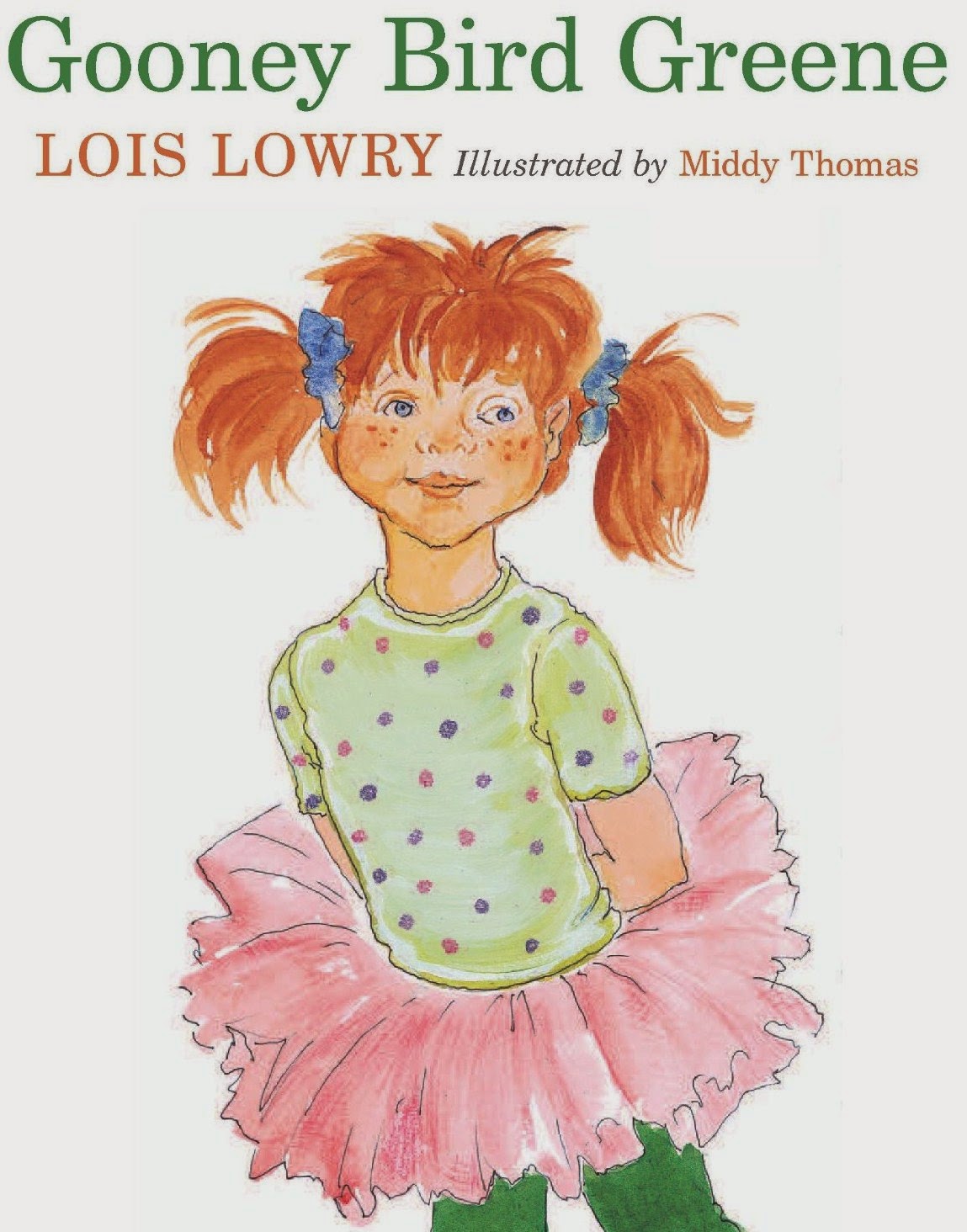 To be honest, I was less than
enthusiastic when my sister Elaine announced we would be listening to the Gooney Bird CDs on a car trip. "I listened to these when we were on a trip with Brianna [her seven-year-old granddaughter and my great
niece],” she said. “They’re really funny.”
To be honest, I was less than
enthusiastic when my sister Elaine announced we would be listening to the Gooney Bird CDs on a car trip. "I listened to these when we were on a trip with Brianna [her seven-year-old granddaughter and my great
niece],” she said. “They’re really funny.”Yeah, I thought. Really funny to a seven-year-old. But what could I say? It was her car.
So, as our journey commenced, I got comfy and—being in the seat behind her—prepared to sleep for the next few hours. But my eyelids had barely begun to droop when Lowry hooked me with her description of the eccentric and precocious Gooney Bird. By the end of the trip, we had to drive a few extra miles so I could find out the identity of the mysterious second-grade room mother. And in between our departure and arrival, Gooney Bird gave excellent tips on storytelling. I was surprised to find that much of Gooney Bird’s advice matched Lamott’s. After all, a wide age gap exists between the target audiences for each of these books. But when I thought about it, the similarities make perfect sense. After all, a good story is a good story, right? So the basic elements should be the same.
For generating content, both Gooney
Bird and Lamott essentially offer the age-old advice to write what you know.
This doesn’t mean a writer has to be a technical expert on the subject she
writes about. I guess it helps, but in this information age, a lot of technical
knowledge is just an internet search away. I think what it does mean, though,
is to take your own experiences and use them as a starting place. One of Gooney
Bird’s stories explains how she got her name. She goes on to point
out that everyone has a name; therefore, everyone has a story. Lamott’s advice
is the same, only she drives home the point with a story about an aunt making
lemonade. Surprisingly (or not), a subject common to both “bird” books concerns
school lunches. Lamott describes how she uses them as an exercise for her writing
classes. An entire passage in one of the Gooney Bird books “shows” Gooney
Bird’s classmates describing and bartering with their varied and interesting
mid-day meals.
If there is an inkling of writer/storyteller
in you (and I believe there is in everyone), the topic of school lunches has to
evoke at least one good story. I immediately remembered the time I forgot to
bring my lunchbox home from school. My mother was out of brown bags, and the
next day I had to suffer the extreme humiliation of toting my lunch to school
in a plastic bread bag. And speaking of lunchboxes, what memories do those
bring to mind? And bread? Did your mother ever try to disguise the bread heels
by spreading the peanut butter and jelly on the crusty sides and pressing them together?
Ha! Nice try, Mama.
By now you get the point. Our own
experiences can generate a lot of stories. A seed of truth pokes through our
consciousness and with proper cultivating grows into a full-fledged story. In
my next installment of Bird-brained Writing Advice, I’ll discuss the proper
care and feeding of those seeds.
I’m always happy to receive comments
of any kind. But this time, I’d especially like to hear any of your own interesting school
lunch experiences. I know you had at least one!
